HLS India logo for business advisory
best practices for cross-border M&A with expert valuation advisory UAE

Valuation and Deal Structuring in 2025: Best Practices for Cross-Border M&A in the UAE

Key Takeaways

  • UAE is a leading hub for cross-border M&A in 2025, attracting global investors.
  • Accurate valuation advisory in UAE ensures fair and sustainable deals.
  • Best practices in deal structuring include regulatory compliance, tax planning, and risk mitigation.
  • Corporate tax, VAT, and AML regulations make advisory support more crucial than ever.
  • HLS-Global UAE provides trusted transaction advisory services in Dubai, blending global standards with UAE-specific expertise.

Introduction: UAE’s Growing Role in Global M&A

In 2025, the UAE is cementing its role as a leading destination for mergers and acquisitions, particularly in sectors such as energy, logistics, technology, and financial services. Favorable tax policies, strategic location, and strong regulatory frameworks make the UAE a hotspot for international investors. For companies navigating cross-border deals, accessing transaction advisory services in Dubai has become essential to balance valuation accuracy, compliance, and strategic deal structuring.

Why Valuation is Critical in Cross-Border Transactions

Accurate valuation is the cornerstone of every merger or acquisition. It ensures that investors and sellers negotiate from a position of fairness while mitigating post-deal disputes. In the UAE, where cross-border activity is growing, valuation advisory in UAE incorporates international standards alongside local regulatory expectations, giving businesses confidence in their financial decisions.

Best Practices in Deal Structuring for 2025

Structuring an M&A deal goes beyond financials—it aligns tax efficiency, legal compliance, and long-term strategic goals. With M&A deal advisory, best practices include:

  • Choosing the right entity structure (mainland, free zone, or offshore).
  • Securing regulatory approvals under MOE, DIFC, or ADGM.
  • Integrating corporate tax and VAT planning into the deal.
  • Building risk mitigation measures (escrow, indemnities, warranties).

Focusing on cultural and operational integration post-acquisition.

Table: Common Deal Structures in UAE Cross-Border M&A

Deal Structure

Advantages

Best For

Asset Purchase

Flexibility, tax advantages

Buyers seeking specific assets

Share Purchase

Continuity, faster deal closure

Acquirers aiming for full control

Joint Venture

Shared risk and local knowledge

Foreign investors entering UAE markets

Merger

Stronger market position, synergies

Strategic consolidation of large firms


Regulatory and Tax Considerations in 2025

The introduction of UAE corporate tax, combined with ongoing VAT enforcement and anti-money laundering (AML) regulations, has reshaped how deals are structured. This makes professional transaction advisory services in Dubai indispensable. By ensuring compliance with local authorities, businesses safeguard both profitability and reputation.

How HLS-Global UAE Adds Value

At HLS-Global UAE, our expertise lies in bridging international practices with local compliance. Our transaction advisory services in Dubai include:

  • Independent valuation advisory in UAE
  • Financial, tax, and legal due diligence
  • Structuring and negotiation support
  • Compliance with UAE corporate tax and AML regulations
  • Seamless post-merger integration strategies

Conclusion

As the UAE becomes a magnet for global M&A activity, precise valuation and smart structuring are the key to success. With expert M&A deal advisory and valuation services, companies can minimize risks, maximize synergies, and ensure compliance with UAE’s evolving legal and tax landscape. HLS-Global UAE stands as a trusted partner, offering international expertise with deep local insight—helping businesses structure cross-border deals that deliver sustainable value.

Connect with us on Instagram and LinkedIn.

Disclaimer: All views expressed in this article are solely for informational purposes and should not be construed as legal advice. This information is for reference only and is bound to change in case of any amendments or changes to applicable laws. We do not assume any responsibility or liability for any errors or omissions in the content of this article, and do not make any warranties about the completeness, reliability and accuracy of the information expressed in this article.
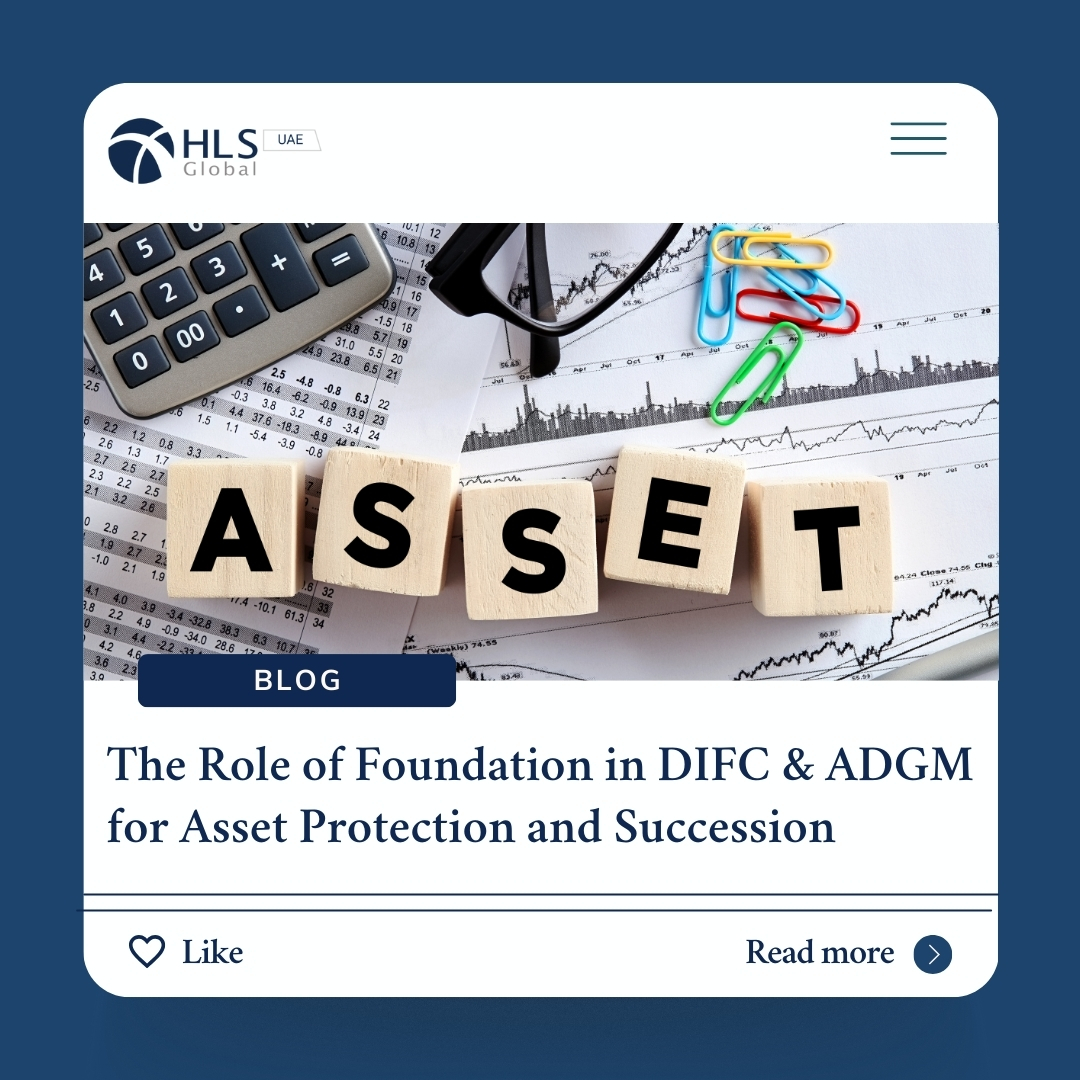
DIFC and ADGM Foundation | Asset Protection & Succession

The Role of DIFC and ADGM Foundation in Asset Protection & Succession

Purpose of a Foundation

A Foundation is a legal entity that combines features of a company and a trust, offering a structured and secure vehicle for asset protection, estate planning, wealth preservation, and philanthropic purposes.

Unlike a trust, a foundation has its own legal personality and can hold assets in its own name. It is commonly used for:

  • Succession and estate planning
  • Family wealth consolidation
  • Charitable or philanthropic purposes
  • Safeguarding assets from third-party claims
  • Holding shares in family businesses or investment vehicles

Benefit of Establishing a Foundation- Purpose & Advantages

Establishing a foundation under DIFC or ADGM provides legal certainty and flexibility. The foundation structure offers several key advantages:

  • Legal Personality – Foundations can hold assets, enter into contracts, and initiate legal proceedings in their own name.
  • Perpetual Succession – Foundations continue to exist beyond the life of the founder.
  • Founder Control – Founders can reserve certain powers or appoint a guardian to oversee the council.
  • Confidentiality – Beneficiaries are not publicly disclosed.
  • Asset Protection – Ring-fences assets from personal or business liabilities.
  • No Beneficial Ownership Registration – Particularly attractive for privacy and succession planning.
  • Flexible Purpose – Can be established for private, charitable, or mixed purposes.

Procedure of Registering a Foundation

DIFC Foundation Registration Procedure:
  1. Choose Foundation Name
  2. Prepare Charter and By-Laws
  3. Appoint Founder, Council Members, and Guardian (if applicable)
  4. Determine Registered Office within DIFC
  5. Submit Application to the DIFC Registrar of Companies
  6. Pay Registration Fee
  7. Receive Certificate of Incorporation
ADGM Foundation Registration Procedure:
  1. Choose Foundation Name
  2. Draft Charter and By-Laws
  3. Appoint Founder, Council Members, and Guardian (if applicable)
  4. Engage a Registered Agent (mandatory unless physically present in ADGM)
  5. Submit Application via ADGM’s online portal
  6. Pay Applicable Fees
  7. Certificate of Registration Issued

Benefit of the Registered Agent

A Registered Agent plays a key role in the administration and compliance of the foundation:

  • Liaison: Acts as the point of contact with the Registrar and government authorities.
  • Compliance Oversight: Ensures timely filings and regulatory compliance.
  • Document Maintenance: Maintains statutory records and foundation documentation.
  • Privacy: Shields the founder’s personal involvement in daily affairs.
  • Local Presence: Mandatory for DIFC & ADGM if the foundation does not have a physical office.

Relevant Regulations

Both jurisdictions are governed by English common law principles and offer high transparency, investor protection, and legal recourse.

How HLS-Global UAE Can Assist

HLS-Global UAE offers end-to-end services with its expert for setting up foundations in DIFC and ADGM, including:

  • Initial Advisory: Understanding objectives (asset protection, succession planning, etc.)
  • Structuring: Recommending the optimal structure and jurisdiction
  • Drafting Documents: Charter, By-Laws, Founder Declaration, Resolutions, and Regulatory Forms
  • Liaison with Registrar: Filing and registration on your behalf
  • Provision of Registered Agent (for ADGM) or Registered Office (for DIFC)
  • Ongoing Governance: Council member services, compliance reminders, document safekeeping
  • Confidentiality: Ensuring privacy and discretion throughout the process
  • Cross-border Planning: Aligning foundation setup with global tax, estate, and legal considerations

Connect with on Linkedin and Instagram.

_________________________________________________________________________________

Disclaimer: All views expressed in this article are solely for informational purposes and should not be construed as legal advice. This information is for reference only and is bound to change in case of any amendments or changes to applicable laws. We do not assume any responsibility or liability for any errors or omissions in the content of this article, and do not make any warranties about the completeness, reliability and accuracy of the information expressed in this article.
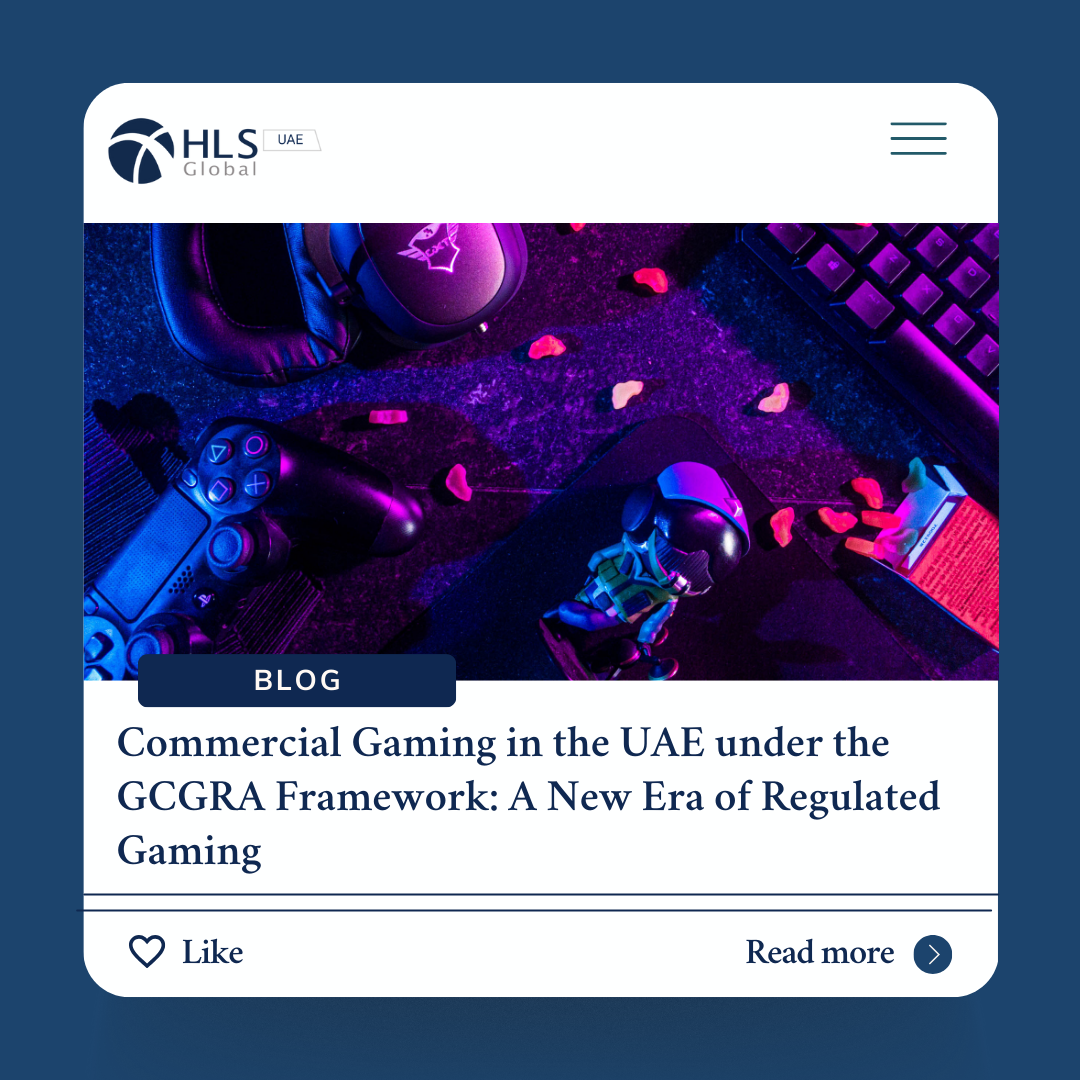
commercial gaming UAE

Commercial Gaming in the UAE under the GCGRA Framework: A New Era of Regulated Gaming

Introduction

The United Arab Emirates has undertaken a historic transformation from its traditional prohibition of gambling to establishing a comprehensive, regulated commercial gaming framework. This landmark shift represents one of the most significant regulatory developments in the region’s business landscape, opening new opportunities for international gaming operators while maintaining strict oversight standards.

At the center of this transformation is the General Commercial Gaming Regulatory Authority (GCGRA), established in 2023 as the federal regulatory body overseeing all commercial gaming activities in the UAE. This regulatory evolution positions the Emirates as a potential regional gaming hub while ensuring robust consumer protection and financial crime prevention measures.

What is the GCGRA Framework?

The GCGRA operates with a comprehensive mandate to regulate all commercial gaming UAE activities across the UAE, including lotteries, internet gaming, sports wagering, and land-based gaming facilities. The authority’s regulatory approach emphasizes three core principles: operational transparency, comprehensive consumer protection, and rigorous financial crime prevention.

Unlike jurisdictions with fragmented gaming oversight, the GCGRA provides centralized regulation ensuring consistent standards across all gaming sectors. This unified approach streamlines compliance requirements while maintaining the regulatory rigor necessary for sustainable market development and international credibility.

The framework establishes the UAE as a jurisdiction committed to legitimate gaming operations while implementing safeguards that protect both consumers and the broader financial system from exploitation and criminal activity.

Licensing Requirements: Mandatory Compliance for All Participants

The GCGRA framework requires comprehensive licensing for all gaming ecosystem participants, including gaming operators, equipment vendors, key personnel, and employees. This universal licensing requirement ensures complete regulatory oversight and eliminates gray areas that could compromise market integrity.

The licensing process follows a structured pathway from initial intake form submission through comprehensive background checks, financial verification, and technical assessments to final license issuance. Applicants must demonstrate operational competence, financial stability, and regulatory compliance capability throughout this rigorous evaluation process.

Operating without proper GCGRA licenses carries severe consequences, including substantial fines, imprisonment for responsible parties, and mandatory business closure. These penalties underscore the authority’s commitment to maintaining a fully regulated gaming environment and deterring unauthorized operations.

Types of Commercial Gaming Activities Covered

The GCGRA’s regulatory scope encompasses the full spectrum of commercial gaming UAE activities:

  • Casino Operations and Land-Based Gaming: Traditional casino facilities, gaming floors, and associated hospitality operations require comprehensive operator licenses and ongoing compliance monitoring.
  • Online Gaming Platforms: Internet gaming operations, including casino games, poker platforms, and digital gaming services, fall under specialized online gaming licenses with technical standards requirements.
  • Sports Wagering and Betting: Sports betting operations, both online and retail, require dedicated wagering licenses with specific consumer protection and market integrity provisions.
  • Lotteries and Lottery Retail: Lottery operations and retail distribution networks require specialized licenses ensuring fair play and proper revenue distribution.
  • Gaming Equipment and Service Providers: Vendors supplying gaming equipment, software, or related services must obtain vendor licenses demonstrating product integrity and regulatory compliance.

Compliance and Risk Management: Comprehensive Oversight

  • The GCGRA maintains rigorous ongoing supervision of all licensed entities through regular inspections, financial audits, and compliance assessments. Licensed operators must implement robust anti-money laundering programs, customer due diligence procedures, and suspicious activity reporting systems.
  • Technical standards requirements ensure gaming equipment and software meet international fairness and security benchmarks. Responsible gaming mandates require operators to implement player protection tools, spending limits, and problem gambling intervention programs.
  • The authority’s investigation powers enable comprehensive enforcement of regulatory violations, with penalties ranging from operational restrictions to license revocation depending on violation severity and impact.

Market Entry Considerations: Strategic Planning for Success

Successfully entering the UAE’s regulated gaming market requires a comprehensive understanding of both GCGRA requirements and broader UAE business regulations. International operators must establish compliant UAE business entities before pursuing gaming licenses, requiring expert navigation of company formation, licensing, and regulatory alignment processes.

The complexity of gaming license applications demands specialized expertise in regulatory compliance, financial structuring, and operational planning. Successful applicants typically engage professional advisory services to ensure comprehensive preparation and optimal presentation of licensing applications.

HLS-Global UAE’s expertise in UAE market entry, regulatory compliance, and business setup provides essential support for companies considering gaming ventures. Our comprehensive understanding of UAE regulatory frameworks enables clients to navigate complex requirements efficiently while avoiding common pitfalls that could delay or compromise licensing success.

How HLS-Global UAE Helps

HLS-Global UAE provides end-to-end support for businesses exploring opportunities under the GCGRA framework. From company setup and licensing assistance to compliance advisory and risk management, we help clients navigate complex regulations with ease. Our tailored strategies ensure faster approvals, minimized risks, and long-term sustainability in the UAE’s regulated gaming market.

Conclusion: Opportunity Through Compliance

The GCGRA framework represents a transformative opportunity for legitimate gaming operators seeking access to the UAE’s dynamic market. This regulatory development opens new possibilities for international expansion while ensuring robust oversight that protects market integrity and consumer interests.

Success in this new regulatory environment requires comprehensive compliance commitment and expert advisory support. The complexity of gaming regulations, combined with UAE business requirements, demands professional guidance to ensure optimal outcomes and sustainable operations.

HLS-Global UAE stands ready to support businesses navigating this exciting new landscape, providing comprehensive regulatory compliance services, market entry strategies, and ongoing advisory support. Our expertise in UAE regulatory frameworks positions us as the ideal partner for companies seeking to capitalize on the opportunities created by the GCGRA’s regulated gaming framework.

Ready to explore gaming opportunities in the UAE? Contact HLS-Global UAE today for expert guidance on GCGRA compliance and UAE market entry strategies.

Connect with us on other platforms:

1. LinkedIn
2. Instagram

Disclaimer: All views expressed in this article are solely for informational purposes and should not be construed as legal advice. This information is for reference only and is bound to change in case of any amendments or changes to applicable laws. We do not assume any responsibility or liability for any errors or omissions in the content of this article, and do not make any warranties about the completeness, reliability and accuracy of the information expressed in this article.

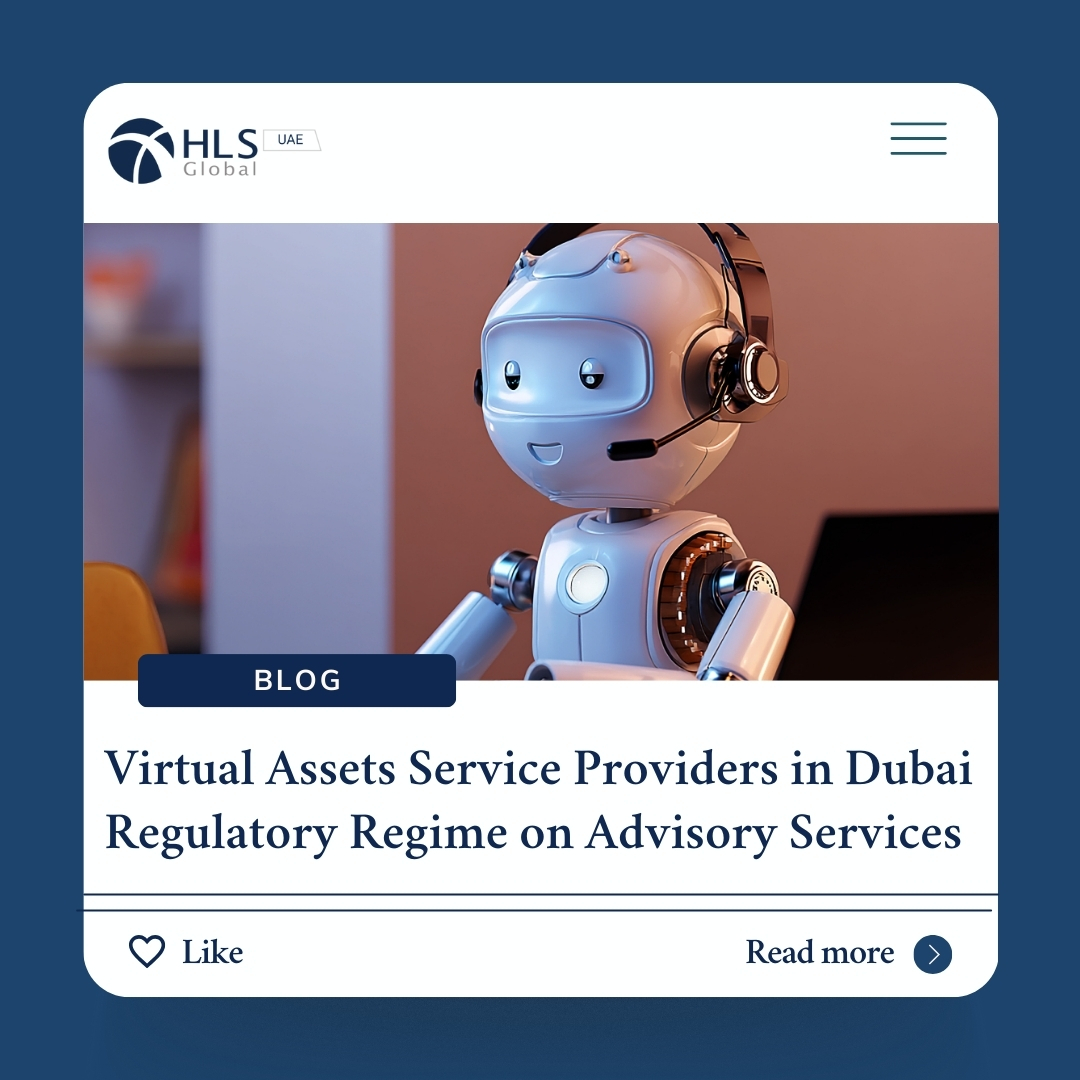
Virtual Asset Advisory Services Dubai | Compliance & Licensing

Virtual Assets Service Providers in Dubai : Regulatory Regime on Advisory Services

The Virtual Assets Regulatory Authority (VARA) of Dubai has laid out a robust, principle-based rulebook for Virtual Asset Advisory Services—applicable to all firms offering consulting, strategy, or technical advisory around virtual assets. As of mid-2025, firms engaging in any form of token-related advisory—whether strategic structuring, tokenomics consulting, whitepaper reviews, or investment due diligence—must be licensed under VARA’s “Advisory Services” VASP category and comply with its bespoke rulebook alongside general compliance frameworks.

What Counts as Advisory Services?

Under VARA’s Advisory Services Rulebook, the following activities fall under licensing scope:

  • Provision of recommendations or opinions relating to acquisition, holding, transfer, or disposal of Virtual Assets;
  • Technical, legal, or tokenomic advisory around token launches, whitepaper structuring, DeFi projects, or tokenized products;
  • Strategic guidance or risk assessments in relation to Virtual Asset platforms or instruments

Licensing Overview

  • License: ‘Advisory Services’ under the dedicated VARA Advisory Services Rulebook.
  • Paid-Up Capital: AED 100,000 must be held in a trust with VARA as beneficiary, via surety bonds, or another approved method.
  • Net Liquid Assets: Must maintain at least 1.2x times of monthly operating expenses.
  • Key Function Officers: Appoint a Compliance Officer, MLRO, and Technology Lead with verifiable DLT and advisory experience.
  • Pre-License Tech Audit: A mandatory third-party review of cybersecurity, platform resilience, and code escrow.
  • Fees & Timeline: AED 40,000 application fee + AED 80,000 annual supervision fee; expect approval within 3–6 months.

Core Regulatory Frameworks (Rulebooks Applied)

In addition to the Advisory Services Rulebook, licensees must comply with:

  • Company Rulebook (entity structure, key individuals, board governance)
  • Compliance & Risk Management Rulebook (AML/CFT, conflict of interest, complaints handling)
  • Technology & Information Rulebook (IT architecture, cybersecurity, outsourcing)
  • Market Conduct Rulebook (advertising, transparency, client interaction norms)
  • Advisory Services Rulebook (client suitability, engagement scope, deliverable standards)

Key Ongoing Compliance Obligations for Advisory VASPs

  1. Client Suitability & Risk Disclosures
  • Documented risk profiling and suitability assessments for each client engagement.
  • Mandatory disclosure of token risks, project stage, liquidity conditions, and non-licensing caveats.
  1. Staff Qualification & Conduct Controls
  • All advisory staff must be certified or demonstrably competent in Virtual Asset markets.
  • Annual performance evaluations and refresher training required; records retained for 8 years.
  1. Public Disclosures & Client Transparency
  • Publish internal policies on conflicts, data protection, whistleblowing, and custody arrangements.
  • Clearly communicate fee structure, disclaimers, and scope limits via formal client agreements.
  1. AML/CFT & Governance
  • Appoint an independent MLRO (Money-Laundering Reporting Officer); conduct enhanced due diligence for all high-risk clients.
  • Internal audit and regulatory reporting to VARA on quarterly and annual basis.
  1. Marketing & Advisory Restrictions
  • All marketing material, including whitepapers and website content, must be pre-approved by VARA.
  • Promotional content must be fair, balanced, risk-disclosed, and non-misleading.
  • Firms cannot guarantee returns or make unqualified endorsements of virtual assets.

How HLS-Global Can Assist You

At HLS-Global UAE, we are equipped to support ‘Advisory Services’ VASPs at every stage:

Licensing & Strategy
  • Draft and submit full license application to VARA.
  • Assist in structuring governance, audits, and regulatory filings.
Compliance Infrastructure
  • Develop AML/KYC frameworks, client onboarding workflows, and training programs.
  • Create rulebook-compliant public disclosures, conflict registers, and engagement templates.
Audit & Inspection Preparedness
  • Mock inspections, compliance gap assessments, and audit coordination.
Post-Licensing Support
  • Ongoing regulatory monitoring, staff certification tracking, and real-time updates on rule changes.

VARA’s regulatory framework is among the most detailed globally. As Dubai positions itself as a premier digital-asset hub, Advisory Services VASPs must be both comprehensively licensed and proactively compliant. Let us help you unlock this growth opportunity—securely, lawfully, and confidently.

Connect with us on other platforms:
1. Instagram
2. LinkedIn


____________________________________________________________________________________

Disclaimer: All views expressed in this article are solely for informational purposes and should not be construed as legal advice. This information is for reference only and is bound to change in case of any amendments or changes to applicable laws. We do not assume any responsibility or liability for any errors or omissions in the content of this article, and do not make any warranties about the completeness, reliability and accuracy of the information expressed in this article.


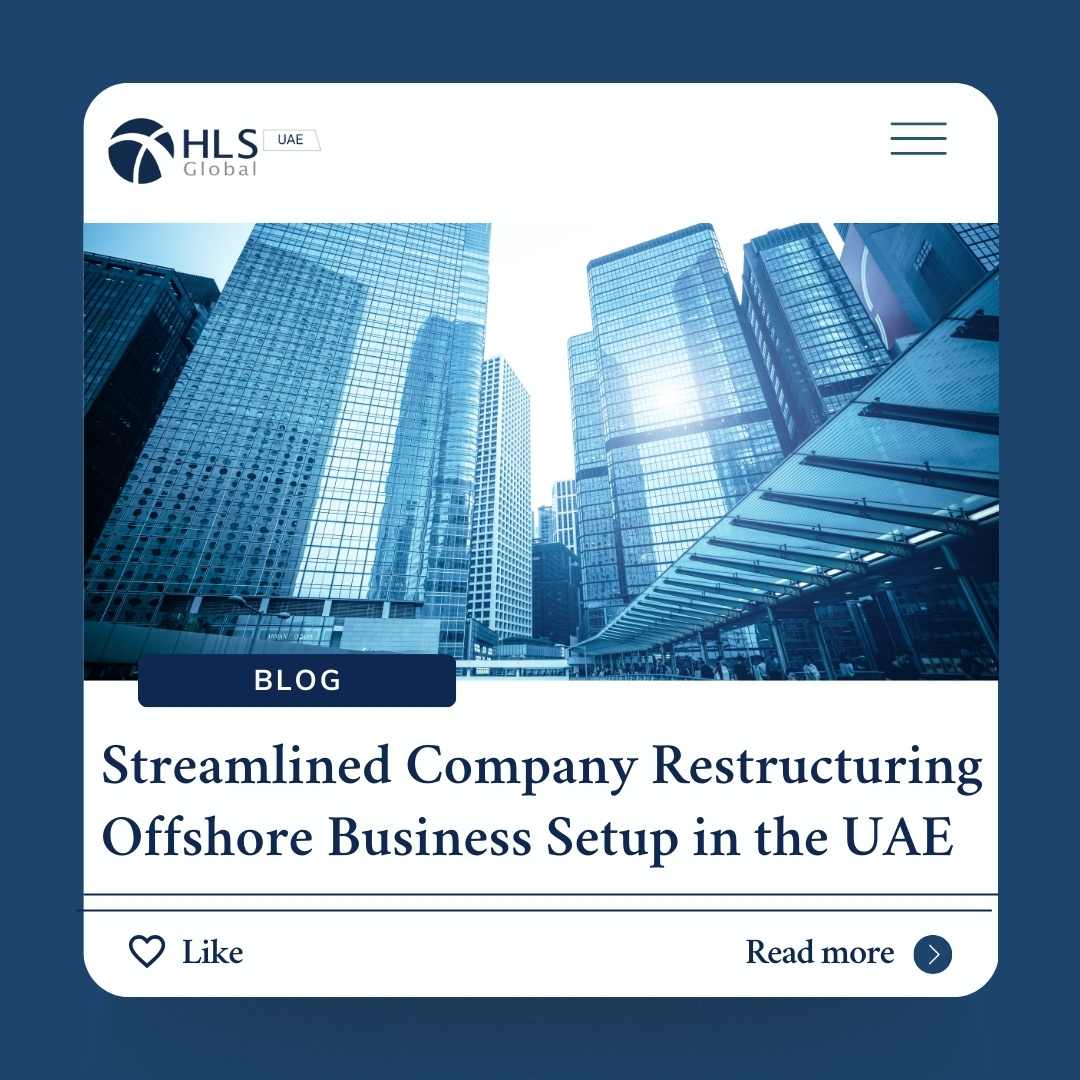
UAE offshore company

Streamlined Company Restructuring : Offshore Business Setup in the UAE

Introduction: Restructuring for Global Growth

Offshore companies remain a widely used tool for international groups, family offices and investors who need asset protection, cross-border holding structures and simplified reporting. Unlike mainland companies (which trade in the UAE) or free-zone trading entities (which may carry on limited UAE business), offshore vehicles in the UAE are designed for international activities only: holding shares, IP, real estate (where permitted), treasury or investment assets. They offer fast incorporation, 100% foreign ownership and practical confidentiality — but they are not licensed to trade in the UAE domestic market. As global business advisors and management consultants in UAE, HLS-Global UAE guides international and local clients through these complex changes, ensuring your restructure supports both regulatory compliance and strategic growth.

Where can you incorporate?

In practice most clients choose one of three well-established UAE offshore free zones:

  • JAFZA Offshore (Jebel Ali, Dubai)
    A long-standing offshore/IBC regime with efficient incorporation channels and acceptance among regional banks. JAFZA offshore companies are commonly used for holding assets linked to logistics, trading groups and real estate in approved zones.
  • RAK ICC / RAKEZ (Ras Al Khaimah)
    RAK ICC is an internationally recognized offshore free zone popular for holding structures, SPVs and treaty planning. RAK’s flexible incorporation rules and competitive costs make it a frequent choice for investment vehicles.
  • Ajman Offshore (Ajman Free Zone)
    A low-cost, fast-setup offshore option suited to pure holding and estate-planning structures where minimal local formalities are preferred.

(Each free zone has distinct statutory rules and permitted activities — selection should follow your commercial, banking and succession objectives.)

Key Compliance Requirements

  • Annual Renewal: Offshore registrations are renewed yearly; renewal fees and agent charges apply.
  • UBO & Company Records: Maintain an up-to-date ultimate beneficial owner register and statutory records (share transfers, board minutes).
  • Accounting & Audits: Most pure-holding offshore companies have minimal reporting obligations but keep proper books and be prepared to produce financials on request from banks or counterparties.
  • AML / KYC cooperation: Expect continual due diligence requests from bankers and service providers; retain source-of-fund and identity documentation.
  • Regulatory notifications: Notify the registrar or your agent of any change in directors, shareholders or registered address within the prescribed period.

Benefits & Limitations — What to Expect

Benefits
  • Ownership flexibility: 100% foreign ownership and straightforward share transfers.
  • Simplicity & speed: Rapid incorporation with limited public filings.
  • Confidentiality: Limited public disclosure compared with onshore registrations.
  • Efficient holding vehicle: Ideal for holding shares, IP, aircraft, yachts or cross-border investments.
Limitations
  • No UAE domestic trading: Offshore companies cannot lawfully sell to UAE residents or bid for mainland contracts without a separate onshore or free-zone trading entity.
  • Visa sponsorship: Offshore entities generally do not sponsor employment or investor visas.
  • Banking scrutiny: Opening and maintaining bank accounts attracts enhanced KYC and economic-reality checks; some banks impose higher minimums.
  • Tax residency & treaty use: Offshore entities are not automatically UAE tax residents; claiming treaty benefits requires satisfying tax-residency criteria in each case.

Practical Steps for Streamlined Restructuring

  • Clarify objectives: Holding company, IP vehicle, investment SPV or estate planning. This determines jurisdictional fit and corporate form.
  • Choose a registered agent: Offshore incorporations are processed via authorized local agents who submit the application and act as the company’s local contact.
  • Prepare documentation: Typically: passport copies and proof of address for individual shareholders/directors; corporate documents for entity shareholders (certificate of incorporation, board resolution, authorized signatory). Bank/reference letters are often requested.
  • Draft constitutional documents: Prepare the memorandum/statute or articles (agent usually provides templates tailored to the free zone). Decide on share classes, nominee arrangements and corporate governance.
  • Submit application & pay fees: Agent lodges the incorporation pack with the offshore registrar. Typical lead time is 3–10 business days, subject to due diligence and document notarization where needed.
  • Post-incorporation: Open corporate bank account (banks perform enhanced KYC), maintain statutory registers (share ledger, director register), and implement the governance and trust/nominee arrangements as required.

HLS-Global UAE’s Restructuring Support

  • Jurisdictional advice: Recommend JAFZA, RAK ICC or Ajman based on your commercial, banking and succession goals.
  • End-to-end incorporation: Prepare and submit incorporation packs, draft constitutional documents and secure certificates via authorized agents.
  • Banking facilitation: Assist with bank introductions and prepare compliance packs to smooth KYC.
  • Corporate housekeeping: Maintain UBO registers, manage annual renewals and statutory updates.
  • Structuring & advisory: Design holding-company architectures (IP, real-estate, financing) and coordinate with tax advisers and trustees for cross-border efficiency.

Contact HLS-Global UAE today for a personalized consultation on offshore structuring, regulatory compliance, and UAE market entry strategies that keep your business robust, compliant, and primed for global success.

Connect with us on other platforms:
1. Instagram
2. LinkedIn

Disclaimer: All views expressed in this article are solely for informational purposes and should not be construed as legal advice. This information is for reference only and is bound to change in case of any amendments or changes to applicable laws. We do not assume any responsibility or liability for any errors or omissions in the content of this article, and do not make any warranties about the completeness, reliability and accuracy of the information expressed in this article.

 
m&a deal advisory

M&A Deal Advisory in the UAE: Evaluating Risks and Opportunities Before You Buy

Introduction

Most M&A deals in the UAE unravel after the ink dries—not because of valuation mistakes, but due to overlooked compliance and integration hurdles. Licensing mismatches, hidden Ultimate Beneficial Ownership (UBO) complexities, and anti-money laundering (AML) gaps can freeze accounts or void approvals. Regulatory layers such as UBO disclosures and AML checks often go unnoticed—leading to compliance breakdowns or license issues post-acquisition.

Before you buy, risk assessment must drive every step of your transaction advisory services. You need clarity on how the target company’s licenses align with your business model, whether existing staff visas remain valid post-acquisition, and if the entity complies with the Ministry of Economy’s UBO guidelines.

That’s why smart buyers seeking M&A deal advisory rely on HLS-Global UAE—we build a risk-first strategy so you avoid surprises, secure your investment, and ensure your new venture is regulator- and bank-ready from day one.

The New Regulatory Terrain for M&A Deals

The UAE’s regulatory landscape for mergers and acquisitions has evolved dramatically. Gone are the days when financial valuation alone sealed a deal. Today, buyers must navigate complex compliance layers—especially around Anti-Money Laundering (AML) and Ultimate Beneficial Ownership (UBO) disclosures. The Ministry of Economy has intensified scrutiny on UBO filings, making incomplete or inaccurate declarations a direct trigger for fines, frozen licenses, or even forced business closures.

Many buyers underestimate these compliance layers during M&A negotiations. Overlooking regulatory obligations can lead to unexpected compliance issues, stalled operations, or penalties, while ignoring AML red flags can derail banking relationships post-acquisition. This is why transaction advisory services should include a regulatory audit, not just a financial one. At HLS-Global UAE, our M&A deal advisory team aligns deal structures with current laws, ensuring your acquisition stands up to regulatory review—and preserves operational continuity long after the ink dries.

Hidden Liabilities: What Due Diligence Must Cover in 2025

Hidden liabilities often determine whether your M&A deal becomes an asset or a liability. In the UAE, due diligence must go far beyond reviewing balance sheets. You need a deep dive into operational licenses—are they valid, transferable, and compliant with UAE mainland or free zone rules? Tax exposure is another overlooked trap: Unresolved VAT filings, UBO mismatches, or compliance errors can surface after you close. Staff visas and labor contracts must match the acquired entity’s stated headcount and salary obligations—misalignment can trigger Ministry of Human Resources audits. Hidden legal disputes with suppliers, landlords, or regulators can escalate quickly post-acquisition.

At HLS-Global UAE, we use our M&A deal advisory experience to lead comprehensive compliance-focused due diligence. Our transaction advisory services identify risks that could freeze accounts or void licenses, ensuring your deal survives beyond signing and aligns with evolving UAE regulations. Talk to us before you buy.

Structuring the Acquisition: Mainland vs. Free Zone Considerations

Most M&A buyers underestimate how a UAE target’s location—mainland or free zone—shapes the deal’s success. In mainland acquisitions, licenses are linked to physical premises and may not transfer without reapplication, triggering delays or rejections if not planned. In free zones, licenses can be even more restrictive: some require shareholders to requalify with the authority, adding hidden costs and time.

Bank relationships also vary—many mainland accounts rely on local sponsorship documents, which dissolve in ownership changes. Free zone accounts may close automatically if the zone authority isn’t updated before the acquisition. Contract enforceability shifts too; agreements drafted under mainland jurisdiction might not carry over to free zone entities, exposing buyers to disputes they can’t win.

At HLS-Global UAE, our transaction advisory services and M&A deal advisory experts map these risks before you sign, ensuring your deal structure aligns with licensing, banking, and legal realities, not assumptions.

Integration Risks That Break Deals After Signing

Most M&A failures in the UAE don’t happen during negotiations—they happen right after the deal closes. Buyers assume inherited staff, supplier contracts, and daily operations will transfer smoothly. But unclear employment terms, expired vendor agreements, or licensing mismatches can cause immediate disruptions. You risk losing key talent if employment benefits, visas, or titles aren’t aligned with the new owner’s structure. Vendors may suspend services if contract reassignments aren’t negotiated upfront, stalling operations from day one.

Early integration planning is essential. At HLS-Global UAE, we embed HR assessments, contract reviews, and licensing verifications into our M&A deal advisory process. This ensures operational continuity, preserves employee morale, and maintains supplier trust. With our transaction advisory services, you can confidently acquire businesses knowing your integration strategy will protect revenue, secure assets, and avoid operational chaos that turns a promising deal into a costly liability. Ready to secure your acquisition’s success?

When HLS-Global UAE Steps In

Before you commit to an acquisition, HLS-Global UAE steps in to uncover what numbers alone can’t show. Our M&A deal advisory team stress-tests your target’s licensing, corporate structure, and UBO records to ensure the deal won’t collapse under regulatory scrutiny. We’ve helped buyers avoid last-minute license rejections by revealing outdated trade activities, uncovering hidden tax liabilities that would have triggered fines, and clarifying ownership chains to satisfy AML and UBO compliance requirements.

Our transaction advisory services go beyond standard financial due diligence—we coordinate with banks to confirm post-acquisition account viability and align the acquisition structure with the UAE’s compliance frameworks. This approach makes your deal regulator-ready and bank-compliant from day one, preserving your investment and credibility.

For a transaction that withstands the UAE’s complex rules, talk to HLS-Global UAE before you sign. Let our experts secure your M&A success with precision and foresight.

Final Word: Buy with Clarity, Not Assumptions

Most M&A failures in the UAE aren’t due to poor valuations—they happen because buyers overlook regulatory red flags, hidden tax exposures, or licensing complications unique to the region. In today’s environment, Regulators enforce Ultimate Beneficial Ownership rules strictly, along with broader compliance expectations in M&A transactions. Missed details can freeze bank accounts or invalidate licenses post-acquisition. At HLS-Global UAE, we don’t just crunch numbers; we dig into your target’s compliance posture, banking relationships, and operational realities so you avoid nasty surprises. Our M&A deal advisory team helps you map real risks before you commit capital, while our transaction advisory services ensure smooth license transitions, risk analysis, and regulatory coordination with relevant UAE authorities. Don’t let assumptions sink your investment.

Talk to HLS-Global UAE today—buy with clarity, not blind spots. Get the guidance that protects your deal, your reputation, and your future growth in the UAE.

Connect with us on LinkedIn and Instagram.

Q1. What is M&A advisory for IT companies in UAE?

A1. It’s expert guidance for IT firms on mergers, acquisitions, valuations, and deal structuring in the UAE.

Q2. Why do IT companies in UAE need M&A advisory services?

A2. To scale faster, attract investors, reduce risks, and secure better deal terms in a competitive IT market.

Q3. IT M&A advisory in UAE vs general M&A advisory – what’s the difference?

A3. IT M&A focuses on tech-specific risks like IP and cybersecurity, while general M&A covers broader industries.

Q4. What is the role of an M&A consultant in UAE IT sector deals?

A4. They handle valuation, due diligence, negotiations, compliance, and post-merger integration for IT firms.

UAE residence visa UAE working visa

Working in the United Arab Emirates : Residence Visa Regime

  • As the UAE cements its status as a global nexus for talent, innovation, and investment, understanding its multi-tiered residence visa framework is essential. Whether you’re an employee, entrepreneur, investor, freelancer, or sponsor, this guide distills the core requirements, procedures, and timelines—plus how HLS-Global UAE ensures a seamless journey from application to stamping.

1. Green Visa for Work (5 Year, Self-Sponsored)

🔎What It Is

A long-term, self-sponsored residence visa valid for five years allows skilled employees, freelancers and self-employed individuals to live, work and sponsor family—without an employer or national guarantor.

✅Who Qualifies & Key Requirements

Freelancers & Self-Employed

  • Valid freelance/self-employment permit from MOHRE (Ministry of Human Resources & Emiratisation), For guidance on establishing your business structure, see our UAE Market Entry and Restructuring Support services.
  • Bachelor’s degree or specialized diploma.
  • Minimum AED 360,000 annual income over the past two years or proof of financial solvency for the duration of stay.

Skilled Employees

  • Active employment contract in the UAE.
  • Bachelor’s degree or equivalent.
  • Minimum salary of AED 15,000 per month.
  • Classified at first, second or third occupational level by MOHRE.

(Note: The applicable occupational levels are as follows- Level 1: Legislators, managers, and business executives; Level 2: Professionals in scientific, technical and human fields; Level 3: Technicians in scientific, technical and humanitarian fields)

📩Key Advantages
  • 5-year renewable term.
  • No sponsor dependency; self-sponsorship.
  • Can sponsor spouse, children, and other family members.

Understanding compliance requirements is essential – learn more about Regulatory Compliance Services.

📆Process & Timeline

Self-application digitally via MOHRE/GDRFA e-portal service; processing generally completes within 4–6 weeks.

2. Standard Work Visa (2 Year, Employer-Sponsored)

🔎What It Is

The traditional employment visa for private-sector, government and free-zone employees—valid for up to two years and fully sponsored by the hiring entity.

✅Who Qualifies & Key Requirements
  • Private-sector (commercial, industrial, professional); government employees; free-zone personnel (e.g., DIFC, DMCC).
  • Signed employment contract and valid company trade license, Companies establishing operations in UAE should review our Starting a Consultancy in Dubai guide for licensing requirements.
  • Passport copy (≥6-month validity) plus passport-size photos.
  • Attested academic/professional certificates (where specified).
📆Process & Timeline
  • Employer Applies via MOHRE/GDRFA e-portal followed by medical examination at an approved health center, Emirates ID enrollment with ICP, and finally Visa stamping on the passport at GDRFA/MOI (Ministry of Interior).
  • Processing generally completes within 3–5 weeks.

3. Golden Visa (10 Years, No Sponsor Required)

🔎What It Is

A long-term residency visa (10 years) designed to attract high-value investors, entrepreneurs, specialists, scientists, creatives, outstanding students, humanitarian pioneers and frontline heroes.

📩Key Advantages
  • 6-month multiple-entry permit to initiate residency.
  • 10-year renewable residence; no sponsor required.
  • Extended absence allowance (beyond the standard 6 months).
  • Unlimited family & domestic-helper sponsorship.
  • Family stay assured even if the primary holder passes away.
✅Key Eligibility Categories & Requirements

Investors in Public Funds

  • AED 2 million deposit in an accredited UAE fund or AED 2 million share capital in a company.
  • Annual FTA (Federal Tax Authority) tax payment ≥ AED 250,000.
  • 100% ownership of invested capital and proof of medical insurance.

Real-Estate Investors

  • Property portfolio ≥ AED 2 million (owned outright or via approved local-bank loan).

Entrepreneurs

  • Economic project of a technical/innovative nature valued ≥ AED 500,000.
  • Our Advisory Services team can help evaluate project feasibility and structure innovative ventures.
  • Approvals from a UAE auditor, relevant emirate authority and an accredited incubator.

Outstanding Specialized Talents

  • Doctors, scientists, inventors, artists, executives, athletes, PhD holders, and engineers.
  • Category-specific recommendation letters from ministries, councils or accredited bodies.

Outstanding Students

  • National high-school toppers (≥ 95%) or university graduates (GPA ≥ 3.5–3.8; top 100 global universities).
  • Recommendation from Ministry of Education/university; graduation within two years.

Humanitarian Pioneers & Frontline Heroes

  • Minimum five years of distinguished service or funding ≥ AED 2 million; recommendation by competent authorities.
📆Process & Timeline
  • Via ICP “One Touch” service: digital submission, multi-step consolidation of entry permit, residency, Emirates ID and renewals in one workflow.
  • Processing generally completes within 4–6 weeks.

How HLS-Global UAE Streamlines Your Visa Journey

  1. Personalized Category Selection

We analyze your profile—employment, investment, talent—to recommend optimal visa type and jurisdiction.

  1. End-to-End Project Management

From document attestation and application drafting to regulatory follow-up, we handle every detail.

  1. Fast-Track Liaison

Leveraging our direct channels with MOHRE, GDRFA, ICP, and free zones for priority processing.

  1. Compliance & Renewal Alerts

Automated calendar reminders, audit preparations, and proactive renewals to keep you visa-ready.

The UAE’s recent removal from the EU’s high-risk countries list further strengthens its appeal for international residents and investors.

 Ready to secure your UAE residency with zero hassle?

Contact HLS-Global UAE at info@hls-global.ae or visit www.hls-global.ae for a complimentary eligibility assessment.

Navigate the Emirates confidently—your new chapter starts here.


Disclaimer: All views expressed in this article are solely for informational purposes and should not be construed as legal advice. This information is for reference only and is bound to change in case of any amendments or changes to applicable laws. We do not assume any responsibility or liability for any errors or omissions in the content of this article, and do not make any warranties about the completeness, reliability and accuracy of the information expressed in this article.

Commercial gaming

Commercial Gaming & Gambling in the UAE Regulatory Framework

Over the past year, the United Arab Emirates has taken unprecedented steps to regulate commercial gaming (casinos, lotteries, sports betting, etc.), aiming to unlock tourism and economic growth. In 2023, the federal government created the General Commercial Gaming Regulatory Authority (GCGRA) to oversee all licensed gambling under strict, globally-aligned standards. Any company or individual looking to offer casino-style gaming, online betting, lottery or related activities must now obtain a GCGRA license. Our regulatory compliance services help navigate these complex licensing requirements. At HLS-Global UAE, we have been closely monitoring these developments and stand ready to guide clients through the licensing and compliance requirements in this evolving sector.

1. Regulatory Framework & Market Outlook

For decades, most forms of gambling were prohibited in the UAE aside from limited charitable raffles and small promotional lottery draws. In late 2023, the UAE announced a shift: it established the GCGRA and introduced a comprehensive licensing regime. Under the new rules, all commercial gaming requires licensing by the federal authority. Operating without a license is illegal and carries severe penalties (heavy fines, imprisonment, and business closure). Proper business setup in the UAE is essential before pursuing gaming licenses. The GCGRA’s mandate now covers lotteries, internet gaming, sports wagering and land-based facilities (casinos, slot halls, etc.).

The UAE’s new gaming regime is already in motion. In July 2024, the GCGRA awarded the first national lottery license to The Game LLC (an Abu Dhabi-based company). Existing raffle operators (Emirates Draw and Mahzooz) paused their draws at the GCGRA’s request during the licensing process. In October 2024, Wynn Resorts announced it had received the UAE’s first casino license for its planned $3.9 billion resort on Ras Al Khaimah’s Al Marjan Island. These landmark developments have set the stage for further expansion of licensed gaming in the UAE.

The Wynn Al Marjan resort (RAK) is slated to open mid-decade as the UAE’s first luxury casino destination. Abu Dhabi and Dubai have not publicly announced specific casino projects yet, but both emirates are actively designing entertainment zones and regulations. Online gaming and sports betting platforms (including international operators) are also expected to seek UAE licenses as the framework matures. Overall, the outlook for commercial gaming in the UAE is cautiously optimistic. The regulatory framework provides clarity for investors while balancing cultural and social concerns. As additional licenses are issued and projects are built, the UAE could emerge as a major regional gaming hub.

2. Who Needs a License (Eligible Parties)

The UAE’s GCGRA regulates all commercial gaming activities (lotteries, casinos, online betting, sports wagering, etc.) at the federal level. Any company or individual engaging in such activities must obtain the appropriate GCGRA license before operating. Our UAE market entry and restructuring support guides international operators through market entry requirements. The licenses are broadly divided into entity licenses and individual licenses, each with detailed documentary and suitability requirements as below:

  • Gaming Operators: Any company that runs gambling activities must be licensed. This includes casino operators, lottery organizers and retailers, online gaming platforms, sports and event betting operators, etc.
  • Gaming Vendors: Suppliers of gaming equipment or services (e.g. makers of slot machines, IT platforms) must obtain a vendor license.
  • Key Corporate Persons: Entities or individuals controlling a gaming business (typically ≥15% ownership or voting control) must be licensed as Key Persons (Corporate).
  • Key Individuals & Employees: Senior personnel – such as CEOs, CFOs, board members or other “key persons” – and any gaming employees (dealers, attendants) require individual licenses or occupational permits.

Each license type has specific criteria, but broadly any person or company whose activities fall under the definition of commercial gaming must obtain the appropriate GCGRA license before operating. Under GCGRA regulations, “commercial gaming” refers to any activity in which money (or its equivalent) is wagered on games of chance or skill—covering lotteries, casinos, online betting, sports/event wagering, and related gaming platforms.

3. Licensing Process (Key Steps)

The GCGRA’s licensing process is structured and thorough. The key steps are as below:

  1. Intake & Screening: Submit an Intake Form to notify the GCGRA of your intent and provide basic company and project details. The GCGRA performs an initial eligibility review.
  2. Portal Access & Application Fee: If pre-screening is passed, the applicant pays a non-refundable application fee to gain access to the GCGRA’s online licensing portal. All detailed application materials are then submitted through this portal.
  3. Document Submission: Provide comprehensive documentation via the portal – including corporate records, financial statements, organization charts, business plan, information on key persons and third parties, and a responsible gaming plan.
  4. In-Principle Approval: The GCGRA reviews the submission and, if all requirements are met, grants an in-principle approval. At this stage, the applicant pays an ‘In-Principle Fee’ equal to 10% of the total license fees. This approval allows the applicant to incorporate entities, obtain permits, and open bank accounts in preparation for operations.
  5. Final Review & License Issuance: After fulfilling any remaining conditions (such as finalizing corporate structure or technology readiness), the applicant pays the remainder of the license fee (the other 90%). Upon receipt of all fees and documentation, the GCGRA issues the final commercial gaming license and a ‘Certificate of Operation’.

Throughout this process, the GCGRA conducts thorough suitability checks (integrity, financial soundness, criminal background, etc.) on all owners, investors, and key personnel. While the GCGRA aims for an expeditious review, it has not published a fixed timeline. In practice, applicants should allow several months from initial intake to final approval, depending on application completeness and regulatory workload.

4. Fees & Timeline

  • Application Fee: Paid upfront to access the licensing portal. It covers preliminary review and is non-refundable. (The exact AED amount has not been publicly disclosed.)
  • In-Principle Approval Fee: Equal to 10% of the full license fee, due when in-principle approval is granted.
  • License Fee: The remaining 90% of the license fee is payable before final license issuance. This fee is calculated based on the license category and scope of operations (examples might run into the high six or seven figures for major resorts, though official rates are pending release).
  • Renewal/Maintenance Fee: A yearly fee (often a “maintenance” or “renewal” fee) is due each year to keep the license active. This is generally comparable to the initial license fee and is non-refundable.
  • Timeline: The GCGRA has not set formal deadlines, but publicly states it will process applications smoothly and promptly. Applicants should anticipate multiple months for the full cycle (initial intake, reviews, approvals, and company set-up). Prompt submission of complete documentation and fees can help avoid delays.

5. Ongoing Compliance Requirements

Licensed gaming entities face continuous obligations to maintain their license as enumerated below:

  • AML/CFT Compliance: Operators must strictly comply with UAE Anti-Money Laundering and Counter-Terrorism Financing laws. Robust customer due diligence, reporting of suspicious transactions, and related controls are mandatory.
  • Responsible Gaming: Licensees must implement a comprehensive Responsible Gaming Program (“RG Program”). This includes player education on risks, age-verification, advertising only to adult audiences with no misleading promotions, and providing customer support or self-exclusion tools. Biennial audits of the RG program by a GCGRA-approved auditor are required.
  • Reporting and Updates: Companies must keep the GCGRA informed of any material changes (e.g., changes in ownership/control, financial status, jurisdiction, or any legal investigations). Failure to disclose such changes or to report major compliance issues can lead to penalties or license suspension.
  • Audit and Inspection: The GCGRA will conduct ongoing compliance audits and inspections as part of its oversight. Operators must make records and systems available for review upon request.
  • Annual Renewal: Licenses must be renewed each year. Renewal applications (and payment of the annual fee) are due before the expiry of the current licenses. The GCGRA will verify continued compliance as a condition of renewal.

How HLS-Global UAE Can Help

Navigating the new UAE gaming licensing regime requires careful planning and expert advice. Our firm has experience in UAE regulatory processes and global gaming standards. We assist clients by: identifying the correct license categories; preparing and reviewing all application materials (intake forms, business plans, financial models, RG policies, etc.); managing the GCGRA portal submissions; and coordinating required audits and government interactions. We also ensure ongoing compliance post-licensing (AML programs, RG implementation, reporting). In this still-nascent sector, professional guidance is strongly advised. By leveraging our multidisciplinary expertise, we help you streamline the licensing process and confidently operate within the UAE’s gaming framework.

💼 Partnering with HLS-Global UAE means tapping into a boutique team that knows both the local landscape and international gaming norms. We handle the heavy lifting so you can focus on building your gaming business with confidence.
Connect with us on LinkedIn and Instagram.

Disclaimer: All views expressed in this article are solely for informational purposes and should not be construed as legal advice. This information is for reference only and is bound to change in case of any amendments or changes to applicable laws. We do not assume any responsibility or liability for any errors or omissions in the content of this article, and do not make any warranties about the completeness, reliability, and accuracy of the information expressed in this article.

📥

Free: UAE Business Setup Guide

Step-by-step guide for establishing your business in the UAE

Business Setup Consultancy in Dubai

Starting a Consultancy in Dubai: Legal Requirements, Licensing, and Ownership Models

Dubai has rapidly evolved into a global hub for businesses, attracting consultants from around the world to set up operations. The city offers a thriving economic landscape, strategic geographic positioning, and investor-friendly policies. Professionals planning to launch a consultancy in Dubai must navigate a complex legal framework and setup process that directly impacts licensing, ownership, and long-term operations. This guide outlines the key steps, legal requirements, and the role of business setup consultants in Dubai in ensuring a smooth market entry.

Choosing the Right Legal Structure

The first step in setting up a consultancy business in Dubai involves selecting the right legal structure. The primary options include Mainland (licensed by Dubai Economy), Free Zone, or Offshore entities. Your choice of structure affects everything—from how you sign contracts and open bank accounts to where you can operate and who can own shares. Mainland companies offer flexibility to operate across the UAE, while Free Zones provide 100% foreign ownership and tax benefits. HLS-Global UAE assists clients in evaluating these structures to align with their specific business goals.

Licensing Requirements for Consultancy Business Setup in Dubai

Obtaining the appropriate license is a crucial requirement. For consultancy businesses, a professional license is mandatory. The process typically involves:

  • Trade name reservation
  • Initial approval
  • Lease agreement or Flexi-desk arrangement
  • Submission of required documentation
  • Payment of license fees

Free Zones like DMCC or DIFC offer streamlined processes, while Mainland licenses require engagement with the Department of Economy & Tourism (DET). HLS-Global UAE ensures seamless license procurement by managing documentation and compliance requirements.

Ownership Models: Full Foreign Ownership vs. Local Sponsorship

Recent reforms in the UAE now allow 100% foreign ownership for most professional activities, including consultancy services. However, some sectors may still require a Local Service Agent (LSA). Free Zones always offer 100% ownership without the need for a local partner. HLS-Global UAE helps investors assess the best ownership model and provides trusted LSA services when required.

Taxation, Compliance, and Regulatory Governance

Consultancies must comply with VAT registration, Ultimate Beneficial Ownership (UBO) reporting, and Anti-Money Laundering (AML) regulations. HLS-Global UAE supports clients in understanding and meeting these regulatory requirements by coordinating with trusted local partners where needed. HLS-Global UAE supports clients with regulatory advisory, helping you understand key compliance areas like VAT, UBO reporting, and AML, while coordinating with licensed partners where specialized tax filings are required.

Why Choose HLS-Global UAE?

HLS-Global UAE stands out as a reliable partner for consultancy business setup in Dubai. With deep experience supporting Japanese businesses and multinationals, the firm offers end-to-end services including entity formation, regulatory advisory, compliance outsourcing, and transaction support. With a client-first approach, HLS-Global UAE ensures your consultancy setup is strategically structured, regulator-ready, and built to scale.

Informative Table:

Aspect

Mainland Setup (DED)

Free Zone Setup

Ownership

Up to 100% Foreign Ownership

100% Foreign Ownership

Market Access

Full UAE Market Access

Limited to Free Zone & Exports

Licensing Authority

Dubai Economy & Tourism (DET)

Free Zone Authority

Office Requirement

Physical Office Required

Flexi-desk or Virtual Office

Conclusion

Setting up a consultancy in Dubai offers immense opportunities but requires careful navigation through legal, licensing, and compliance landscapes. With expert guidance from business setup consultants in Dubai like HLS-Global UAE, entrepreneurs can achieve a successful market entry and long-term business growth. Reach out to HLS-Global UAE for bespoke advice tailored to your consultancy ambitions in the UAE.

Connect with us on LinkedIn and Instagram.

Disclaimer: All views expressed in this article are solely for informational purposes and should not be construed as legal advice. This information is for reference only and is bound to change in case of any amendments or changes to applicable laws. We do not assume any responsibility or liability for any errors or omissions in the content of this article, and do not make any warranties about the completeness, reliability and accuracy of the information expressed in this article.

Anti-money Laundering, AML services

EU Delists UAE from ‘High-Risk Third Countries’ List

Introduction

On July 09, 2025, the European Union officially removed the United Arab Emirates from its “high-risk third countries” AML/CFT list—mirroring the FATF’s grey-list delisting in February 2024. This marks a watershed moment in the UAE’s financial-compliance journey, reflecting material reforms and unlocking tangible benefits for trade, investment, and international partnerships. Businesses can now leverage improved market conditions while ensuring their AML services align with international standards.

1. EU AML/CFT Regime Overview

Under Directive (EU) 2015/849 (4th and 5th AML Directives), the European Commission maintains a dynamic list of high-risk jurisdictions whose shortcomings trigger regulatory compliance services for EDD by EU financial institutions. Countries are reviewed annually based on FATF evaluations and bilateral assessments. While listing imposes automatic EDD, delisting requires demonstrable alignment with global standards—spanning legal frameworks, supervisory capacity, and enforcement outcomes. Organizations operating in both EU and UAE jurisdictions require sophisticated AML services to navigate these evolving regulatory landscapes effectively.

2. From Listing to Delisting: UAE’s Reform Trajectory

Initial Listing (2022): Concerns over limited transparency, beneficial-ownership opacity, and uneven enforcement across sectors, including real estate and precious-metals trading.

Catalytic Reforms:
  • National AML/CFT Strategy 2024–2027: Eleven core objectives targeting risk-based supervision and sectoral outreach (banks, real estate, corporate services).
  • Specialized AML/CFT Courts: Expedited prosecution and increased convictions for predicate offences.
  • Beneficial-Ownership Registry: Mandatory disclosures with inter-agency data-sharing protocols. For guidance on implementing and maintaining your registry disclosures, see our Secretarial Compliance Enhanced Penalty Regime
  • AML Oversight Expansion: Inclusion of VASPs, auditors, and trust-service providers under enhanced supervision.
  • Enforcement Intensification: Over AED 350 million in fines levied by the Central Bank since early 2025.

EU Delisting Rationale: The European Parliament’s decision followed a positive Commission recommendation, underscoring the UAE’s effective implementation of AML/CFT reforms and sustained enforcement track record.

3. What Delisting Means for the UAE

  • Reduced Compliance Burdens: EU banks and asset managers no longer apply blanket EDD to UAE counter-parties—streamlining client onboarding and transaction processing. While compliance requirements are streamlined, businesses still benefit from expert AML services to maintain best practices and competitive advantages.
  • Enhanced Market Access: Smoother cross-border payments and capital flows, with IMF estimates suggesting potential FDI uplifts of up to 3% of GDP and overall capital inflows of nearly 7.6% of GDP post-delisting.
  • Free Trade Agreement Momentum: With regulatory obstacles alleviated, the UAE-EU FTA negotiations—launched April 2025—are poised to accelerate, especially in renewable energy, green hydrogen, and critical-materials trade.

Reputational Upside: Global investors and correspondent banks view the UAE as a mature, reliable financial hub, bolstering its status as a gateway linking Europe, the Middle East, and Asia.

4. Continued Vigilance & Next Steps

Delisting is contingent on sustained compliance. The EU will conduct periodic reviews, and UAE authorities have signaled ongoing enhancements—especially in Regulatory Compliance Services and beneficial-ownership verification—to guard against emerging threats and preserve confidence.

How HLS-Global UAE Can Assist

  • Strategic Advisory: Interpret EU delisting criteria and integrate them into your AML/CFT frameworks.
  • Compliance Optimization: Our comprehensive AML services help tailor EDD and KYC policies to leverage reduced scrutiny while maintaining international best practices.
  • FTA Readiness: Align trade-compliance processes for seamless participation in the upcoming UAE-EU Free Trade Agreement.
  • Regulatory Monitoring: Real-time alerts on EU/ECA list updates and bilateral AML/CFT dialogues.
  • Training & Audits: Conduct bespoke workshops and mock inspections to ensure continued adherence to international standards.

Position your business to capitalize on the UAE’s enhanced financial standing—partner with HLS-Global UAE for end-to-end guidance.

 info@hls-global.ae |  +971562318810

Connect with us on LinkedIn and Instagram.

Disclaimer: All views expressed in this article are solely for informational purposes and should not be construed as legal advice. This information is for reference only and is bound to change in case of any amendments or changes to applicable laws. We do not assume any responsibility or liability for any errors or omissions in the content of this article, and do not make any warranties about the completeness, reliability and accuracy of the information expressed in this article.