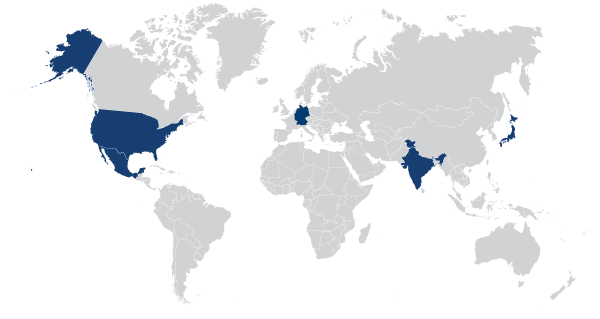
 USA
USA
 JAPAN
JAPAN
 MEXICO
 INDIA
INDIA
 GERMANY
 SINGAPORE


Overview
With effect from 1 January 2026, amendments to the UAE Civil Transactions framework impose an urgent requirement for expatriate residents who wish to govern succession of UAE-situated assets: where a foreign resident dies in the UAE without a valid registered Will or identifiable heirs, their UAE assets may be declared heirless and transferred to a supervised charitable endowment (waqf). Expatriates should therefore register a valid UAE to most Will without delay to preserve testamentary control.
What Changed & Why It Matters
- Statutory outcome for ‘heirless’ estates: The amendment provides a clear legal route for dealing with assets of foreign residents who die in the UAE with no registered Will or identifiable heirs: such UAE-situated assets may be placed into a supervised charitable endowment rather than remain in legal limbo. This replaces prior uncertainty and sets an express public-interest outcome for unclaimed estates.
- Practical consequences for expatriates: A registered UAE Will is now the most reliable method to ensure UAE property, bank balances and investments pass according to the testator’s wishes (including appointment of executors and guardians). Without a local registered Will, beneficiaries named only in an overseas will may face practical and legal barriers to recovery of UAE assets.
- Institutional response expected: Banks, land registries, employers and other service providers are likely to treat a registry reference as primary evidence of testamentary intent; registered Wills reduce post-death friction, shorten administrative timelines and materially reduce legal and reputational risk for stakeholders.
Consequences Of Non-Registration
- Automatic transfer to Waqf: UAE assets of a deceased foreigner without a registered Will or identifiable heirs may be designated as a charitable endowment and administered by the competent authority.
• Loss of testamentary control: Beneficiaries under foreign Wills may be unable to enforce entitlements over UAE assets without local registration or a successful local probate process.
• Delay, cost and uncertainty: Estates without a registered Will typically face longer court involvement and higher administration costs — outcomes registration is designed to avoid.
How Expats Can Register A Will In The UAE
Choice of registry should be driven by the testator’s religion, nationality, residence and the location of UAE assets. The three commonly used registries are set out below in brief.
DIFC Wills Service Centre (DIFC Registry)
- Scope: Commonly used by non-Muslim expatriates for Dubai-situated assets (and frequently relied upon for RAK assets). The DIFC Will is drafted in a common-law style and in English, and is well suited to testators seeking an English-language instrument and testamentary freedom. While DIFC Wills can nominate assets across the UAE and abroad, they are most straightforward to enforce for Dubai/RAK assets; assets in other emirates may require additional recognition steps.
- Practicalities: Online application and appointment booking; remote witnessing and video-notarisation options are available. On completion, the registry issues a formal certificate/reference and securely stores the Will. For assets outside Dubai/RAK, expect potential follow-up measures (local translation or recognition) to facilitate enforcement.
Dubai Courts (On-Shore Notarial / Registry Route)
- Scope: The primary on-shore route for Dubai-centric estates and for testators who prefer an Arabic-notarised instrument or who require on-shore judicial recognition. Dubai Courts registrations are typically chosen where asset enforcement within Dubai is the priority.
- Practicalities: Wills filed with Dubai Courts commonly require an Arabic text or a sworn Arabic translation; notarisation and court-registration formalities apply. The court notary records the Will and issues a registry reference. Where the Will deals with assets outside Dubai, additional local procedures (recognition, translation or ancillary filings) may be necessary to effect transfer in other emirates.
Abu Dhabi Judicial Department (ADJD — Non-Muslim Wills Office)
- Scope: Primary registry for Abu Dhabi-situated assets and commonly used by non-Muslim expatriates. ADJD Wills may also expressly dispose of assets located elsewhere in the UAE (and abroad), but they are most directly effective for Abu Dhabi assets; cross-emirate enforcement can require additional local steps.
- Practicalities: Online submission portal, document upload, fee payment and a notarisation appointment (video or in-person); ADJD issues a registry number and certified electronic Will.
Registration — Practical Checklist
- Identity documents: Valid passport copy and national ID; Emirates ID if resident (originals for notarisation).
• UAE asset inventory: Clear list of UAE-situated assets with identifying references (property title numbers, bank account and investment details).
• Beneficiaries & appointments: Full names and ID details for beneficiaries, named executors and any guardians.
• Family documents (if relevant): Marriage certificate, children’s birth certificates and other supporting family records.
• Draft Will & translations: Draft Will text; sworn Arabic translation if required by the chosen registry.
• Registry fees & evidence: Payment of applicable registry fees and safe retention of the registry certificate/reference once issued.
How HLS-Global UAE Can Assist
Our team provides a focused, end-to-end service to ensure your testamentary arrangements comply with the new UAE regime and operate smoothly in practice. We can:
- Advise on optimal registry selection (DIFC, Dubai Courts or ADJD), tailored to nationality, religion, residency status and the location and nature of UAE assets.
• Draft and review bespoke UAE Wills, including asset schedules, executor and guardian appointments, and prepare sworn Arabic translations where required.
• Manage the registration process end-to-end, covering document collation, portal submissions, notarisation scheduling (including remote/video options) and registry liaison.
• Coordinate post-registration readiness, delivering certified copies and registry references to banks, landlords and corporate administrators to reduce post-death delays.
• Align cross-border succession planning, ensuring UAE Wills align with overseas Wills and broader estate, tax and immigration considerations.
These amendments make prompt Will registration essential — getting your testamentary affairs in order now protects family interests and preserves value.
Contact HLS-Global UAE for a practical, end-to-end Wills registration and estate-planning program.
📧 info@hls-global.ae | ☎ +971 56 231 8810
Disclaimer: All views expressed in this article are solely for informational purposes and should not be construed as legal advice. This information is for reference only and is bound to change in case of any amendments or changes to applicable laws. We do not assume any responsibility or liability for any errors or omissions in the content of this article, and we do not make any warranties about the completeness, reliability, and accuracy of the information expressed in this article.