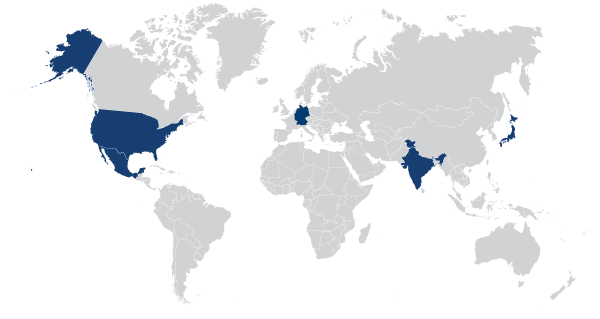
 USA
USA
 JAPAN
JAPAN
 MEXICO
 INDIA
INDIA
 GERMANY
 SINGAPORE


Introduction
On October 01, 2025, the UAE issued Federal Decree-Law No. 20 of 2025 introducing sweeping amendments to the UAE’s onshore Commercial Companies Law (Federal Decree Law No. 32 of 2021). These reforms modernize the corporate framework, align it with international best practices, and add new tools for shareholders and businesses. Key changes include clarified rules for free-zone companies, recognition of non-profit companies, codification of drag‑along and tag‑along rights (with succession planning), new share-class structures, simplified capital raising, governance continuity measures, and company re-domiciliation. These are material changes that companies and investors must factor into structuring, shareholder agreements, IPO readiness, and M&A planning.
Key Amendments At A Glance
- Applicability to Free-Zone Companies: The amendments clarify that free‑zone entities (including branches or representative offices) doing business onshore will now fall under the Companies Law. The law explicitly permits UAE free-zone companies to open mainland branches (subject to free-zone rules) and confirms that all companies incorporated in any UAE free zone (including ADGM/DIFC) have UAE nationality for corporate purposes. As a result, free‑zone investors gain certainty under the “dual licence” model. Companies should review their onshore activities to ensure compliance with the CCL, and they may benefit from UAE nationality status in contracting and licensing.
- Non-Profit Companies: For the first time, onshore companies may be formed for non‑profit purposes. Under the amended provisions, any profits must be reinvested in the company’s stated objectives and no distributions to shareholders are allowed. This fills a longstanding gap by creating a formal corporate vehicle for social, charitable or community initiatives. Businesses and NGOs should monitor forthcoming Cabinet regulations on permitted NFP activities and prepare to structure eligible entities as non‑profit companies.
- Drag-Along, Tag-Along & Succession Rights: The law now expressly permits LLCs and private JSCs to include drag‑along and tag‑along mechanisms in their constitutional documents. Majority shareholders can agree to force remaining shareholders to sell their shares to a third party when agreed conditions are met (drag‑along), while minority shareholders can secure the right to join a sale on identical terms (tag‑along). Further, the amended law also allows companies to pre‑define share transfer rules on a shareholder’s death – for example, granting surviving shareholders or the company itself a right of first refusal or purchase. Embedding these rights in the Articles of Association or shareholders’ agreements strengthens exit and succession planning.
- Private Placements for Private JSCs: Private Joint Stock Companies (PrJSCs) can now raise capital via private placements of shares or other securities in the UAE, subject to SCA regulations. Where a PrJSC conducts a private placement, the usual one‑year lock-up on founders’ shares no longer applies. Thus, growth-oriented or pre-IPO companies gain an intermediate funding route without converting to a Public JSC.
- Multiple Share Classes (LLCs): The amendments authorize LLCs to issue different classes of shares with varied rights (such as voting, dividend priority, redemption, liquidation preference, etc.). This brings mainland LLCs in line with common corporate structures used in venture capital and PE investments. LLCs can now attract sophisticated financing by creating preferred or non‑voting shares, but must carefully document each class’s rights and file them with the Commercial Register.
- Board Deadlock (Governance Continuity): The CCL now explicitly empowers regulators to appoint interim directors/managers (who need not be shareholders) if an LLC’s board term expires without reappointment. Previously, any appointed interim manager had to be a shareholder, which could perpetuate deadlock. This gives deadlocked companies a safety valve: competent outsiders can temporarily manage the company (for up to one year) to prevent paralysis. Companies should note this change and ensure timely board elections/notifications to avoid involuntary external appointments.
- Re-Domiciliation of Companies: A new provision allows a UAE company to transfer its registration from one Emirate to another, or between the mainland and any free zone (including ADGM/DIFC), without losing its legal identity. All rights, contracts, assets and liabilities continue uninterrupted upon migration. Businesses gain flexibility to realign jurisdictional or regulatory oversight (for example, moving to a financial free zone or vice versa) without dissolving and re-incorporating.
- Simplified Conversion to PJSC: The amendments streamline a company’s conversion into a Public Joint Stock Company by relaxing certain formalities. For example, a founders’ committee is no longer required for conversion. As a result, companies pursuing public listings will face fewer procedural hurdles.
- Valuation of In-Kind Contributions: The law tightens the rules on non-cash capital contributions. Any asset contributed in exchange for shares must now be valued by one or more appraisers approved by the Ministry of Economy and Tourism. Contributions made without the required valuation are void. Founders and investors should engage qualified valuers early in a capital structuring process to ensure compliance and avoid invalidation of share issuances.
How HLS-Global UAE Can Assist
Our corporate practice is ready to help clients navigate and implement these reforms in an efficient manner. We can:
- Review and update companies’ constitutive documents (MOAs/AOAs) and shareholder agreements to embed the new rights (drag‑along, tag‑along, share classes, succession clauses, etc.).
- Advise on structuring and complying with in-kind contributions (including engaging approved valuers and preparing valuation documentation).
- Assist with capital-raising strategies (structuring private placements, coordinating with the SCA, preparing offering materials, and addressing share lock-up issues).
- Guide corporate reorganizations (such as re-domiciliation or changes in share classes) by liaising with regulators and managing required filings.
- Counsel boards and management on updated governance rules (e.g. handling board appointments, extensions, and deadlock scenarios) and train teams on compliance obligations.
These reforms modernize UAE company law — but precise drafting, timely registration and disciplined record-keeping are non-negotiable. Get your constitutions and registrations right from day one to protect investor value and avoid costly disputes.
Contact HLS-Global UAE for a practical, end-to-end implementation programme.
📧 info@hls-global.ae | ☎ +971562318810